UNISTUNIST

ADMISSIONS

발전기금
모바일메뉴 열기
 

UNIST site map

전체 메뉴 닫기
STUDENT
 
Scroll Down

UNIST Today

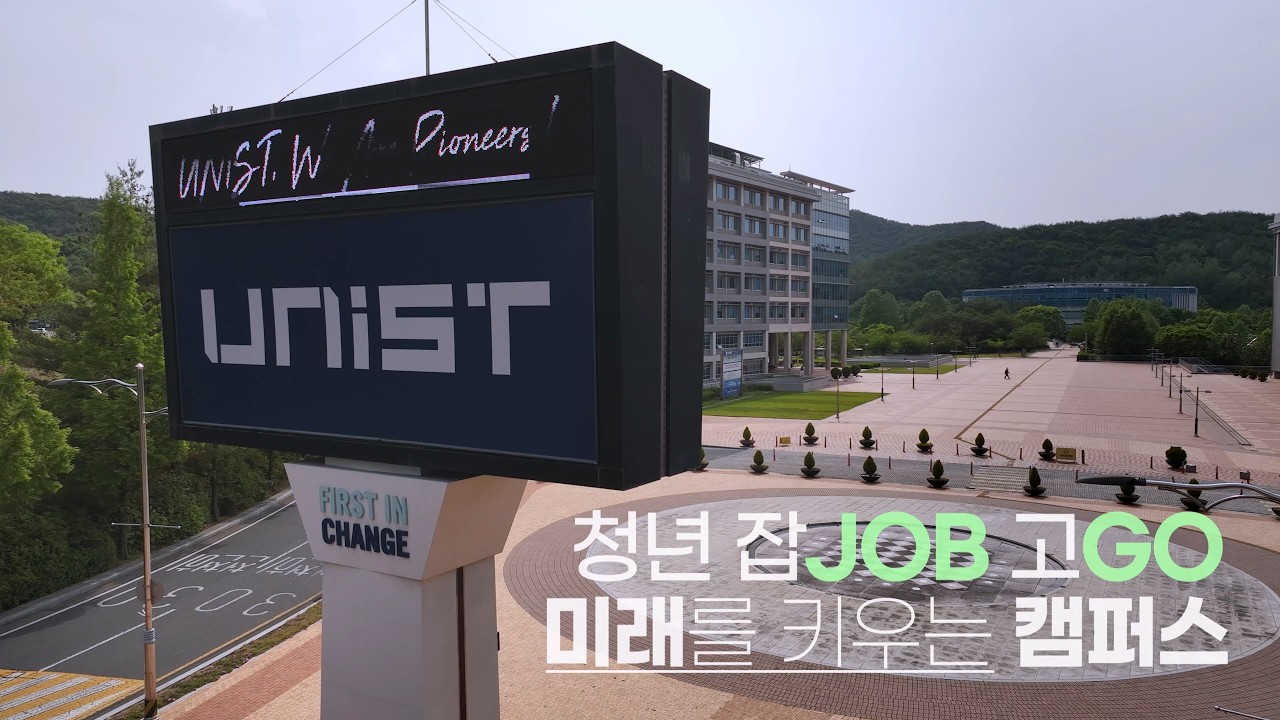
we are all

pioneers!

UNIque & beST

Nexus

UNIST Today

we are all

pioneers!

UNIque & beST

Nexus

Information for UNISTar

WHY UNIST

star

Global
Campus for
Future
Innovators

Research AREA

중점연구분야

Research
AREA

에너지·AI·미래산업에 집중하다

UNIST는 에너지 전환, AI, 미래산업이라는
대한민국의 핵심 과제에 연구 역량을 집중합니다.

  • 에너지 전환
  • 이차전지 · 수소 · 탄소중립
  • Ai 기반 산업 혁신
  • 반도체 · 소재 · 양자
EDUCATION INNOVATION

교육혁신프로그램

EDUCATION
INNOVATION

이론을 배우는 것을 넘어 직접
연구하며 성장하다

UNIST의 학부생부터 대학원생까지 연구의
보조가 아닌 주체로 성장하는 경험을 제공합니다.

  • 학부생 연구참여
  • 국제학회·논문참여
  • 소수정예 밀착 연구지도
industry collaboration

산학협력

industry
collaboration

연구에서 산업까지, 현장과 가장
가까운 UNIST

대한민국 최대 산업도시 울산에 위치한
UNIST는 연구 성과가 기업과 산업 현장으로
가장 빠르게 연결되는 구조를 갖추고 있습니다.

  • 기술사업화·창업지원
  • 울산 산업단지
  • 대기업 · 공기업과의 공동연구
Research support

연구지원

Research
support

젊은 UNIST, 연구에 최적화된
유연한 캠퍼스

UNIST는 가장 늦게 출범한 과기원으로,
관행에 얽매이지 않는 유연한 연구·교육 시스템을
갖추고 있습니다.

  • 빠른 신흥 분야 대흥
  • 단일 캠퍼스 기반
  • 생활.연구 일체형 구조
  • 개방형 연구 공간

Research Impact

star

노화된 망막세포에만 ‘킬러 약물’ 전달..“황반변성 시각 기능 회복”

고령화 시대를 맞아 황반변성 환자가 급증하는 가운데, 시력을 떨어뜨리는 근본 원인 세포만을 선택적으로 제거해 시기능을 되돌리는 기술이 개발됐다. 황반변성은 망막의 황반 손상으로 인해 중심 시야가 흐리거나 뒤틀려 보이는 질환으로, 백내장, 녹내장과 더불어 3대 실명 원인 질환으로 꼽힌다. UNIST 화학과 유자형 교수와 건국대병원 안과 정혜원 교수팀은 노화된 망막색소상피세포(RPE)만 골라서 제거 약물을 전달하는 나노 입자를 개발해, 실험쥐의 시각 기능을 일부 회복하는 성과를 거뒀다고 9일 밝혔다. 망막색소상피세포의 노화는 건성 노인성 황반변성의 주요 원인으로 지목되고 있다. 노화 상태에 접어든 RPE는 단순히 기능을 멈춘 세포가 아니라, 주변에 독성 염증 물질을 뿜어내며 건강한 정상 세포까지 파괴하는 역할을 하기 때문이다. 최근 이 노화 세포를 제거할 수 있는 세놀리틱스(Senolytics) 계열 약물이 주목받고 있지만, 정상 세포에 이 약물이 들어가면 독성 부작용이 일어난다. 연구진이 개발한 나노입자는 노화 세포에만 이 약물을 전달하는 역할을 한다. 노화 RPE는 표면에 Bst2라는 단백질이 많은데, 나노입자 겉면에 이 단백질에만 결합하는 특이 항체를 장착했기 때문이다. 노화 RPE 세포에 도달한 나노입자는 세포 안쪽으로 들어가 분해되면서, 내부에 들어있던 노화 세포 사멸 약물(ABT-263)을 방출한다. 혹시 나노입자가 정상 세포에 오배달되더라도, 노화 세포 특유의 고농도 글루타치온 환경에서만 분해가 일어나게 설계돼 안전하다. 노화된 RPE 표면에 Bst2라는 단백질이 많다는 점도 이번 연구를 통해 처음으로 밝혀졌다. 연구진은 자연 노화 쥐와 화학 약물로 병리적 노화를 유도한 쥐의 유전자 데이터를 교차 분석해, 노화 세포 표지자로서 Bst2를 발굴해 냈다. 개발된 나노입자에 약물을 담아 쥐의 안구에 주사한 결과, 정상 세포 손상 없이 노화 세포만 제거됐으며, 빛에 대한 전기적 반응(망막 전위도)이 유의미하게 커지며 시각 기능이 회복되는 것을 확인했다. 정혜원 교수는 “증상 완화에 머물렀던 기존 치료 방식과 달리, 질환의 출발점 자체를 겨냥했다는 점에 차별점이 있다”며 “마땅한 표준치료법이 없는 건성 노인성 황반변성에서 새로운 치료 접근이 될 수 있을 것으로 기대한다”고 말했다. 유자형 교수는 “노화세포 표면에만 나타나는 단백질을 새롭게 발굴해 노화세포만을 표적하는 약물 전달 나노입자를 설계할 수 있었다”며 “나노입자 표면의 특이 항체만 교체하면 다른 노인성 질환 노화세포 표적 치료에 활용 가능할 것”이라고 밝혔다. 이번 연구는 과학기술정보통신부 한국연구재단(NRF)과 보건복지부 한국보건산업진흥원(KHIDI)의 한국형 ARPA-H 프로젝트 등의 지원을 받아 수행됐으며, 결과는 국제학술지 네이처 커뮤니케이션즈(Nature Communications)에 3월 18일자로 게재됐다.

2026.04.17

  • 3대실명원인
  • 노화망막세포제거
  • 망막세포
  • 세놀리틱스
  • 화학과
  • 황반변성

‘엘니뇨’ 밀리고 ‘남극 진동’ 뜨니 호주 산불 더 극심해졌다 !

호주 남동부 지역의 산불 위험이 매년 극단적으로 널뛰는 예측 불허 국면에 진입했다는 분석 결과가 나왔다. 변동성이 커진 원인으로는 ‘남극환상모드’라는 대기 순환 패턴의 영향력 강화가 지목됐다. 지구환경도시건설공학과 이명인 교수팀은 1981년부터 2022년까지 호주 남동부 지역의 산불 기상 조건을 분석해 이 같은 사실을 밝혀냈다. 이 교수팀의 연구에 따르면, 호주 남동부의 산불 위험이 2000년대 초반을 기점으로 ‘체제 전환(Regime Shift)’이라 부를 만큼 급격하고 불규칙한 변화를 겪고 있다. 이전 시기(1981~2001년)에 비해 최근 20여 년(2002~2022년) 사이 극심한 산불 발생 위험일(Fire Weather Days)은 약 5배나 급증했으며, 해마다 산불의 강도가 널뛰는 ‘변동성’ 또한 2배 이상 확돼되었다. 주목할 점은 산불을 일으키는 ‘지휘자’가 바뀌었다는 것이다. 과거에는 적도 태평양 수온이 변하는 ‘엘니뇨-남방진동(ENSO)’이 호주 산불에 큰 영향을 미쳤으나, 최근에는 남극을 감싸고 도는 대기 순환 패턴인 ‘남극환상모드(SAM)’가 산불 변동성을 결정짓는 가장 강력한 원인으로 부상했다. 이러한 주도권의 변화는 땅과 대기가 서로 영향을 주고받는 ‘지면-대기 결합’이 강화되었기 때문이라는 분석이다. 가뭄으로 인해 지면이 바짝 마르면, 지면이 수분을 어느 정도 머금고 있던 상태보다 태양열이 지표면 온도를 더 급격히 높이고, 이는 다시 대기를 건조하게 만들어 산불이 나기 쉬운 ‘복합 극한 기상(고온, 건조, 가뭄)’을 유도하는 악순환이 깊어진 것이다. 기후 변화는 농업 분야에도 직접적인 타격을 주고 있는 것으로 나타났다. 연구팀은 산불 위험의 변동성이 커질수록 이 지역의 주요 작물인 옥수수 수확량 또한 비례해 크게 변동하는 현상을 확인했다. 기후-산불-농업을 통합한 사회·경제적 재난 관리의 중요성을 보여주는 대목이다. 제1저자인 김기욱 연구원은 “과거에는 산불 예측 시 엘니뇨 현상을 주로 참고했다면, 이제는 남극 지역의 대기 흐름(SAM)과 지면의 건조 상태를 더욱 면밀히 관찰해야 한다”며 “이번 연구는 호주뿐 아니라 기후 변화로 인해 산불이 대형화·일상화되고 있는 전 세계 여러 지역의 산불 예측 성능을 높이는 데 기여할 것”이라고 설명했다. 이명인 교수는 “단순한 기온 상승을 넘어 기상 요인들의 복합적인 상호작용으로 인해 산불의 예측 불가능성이 커지고 있다”며 “강화된 복합 극한 기상 재난의 신호를 기후 모델에 정교하게 반영한다면 미래 기후 재난에 대비한 영향 예보 시스템을 한 단계 고도화할 수 있을 것”이라고 밝혔다. 이번 연구는 UNIST 이명인 교수팀의 주도로 하와이대학교(University of Hawaii), POSTECH 등 국제 공동 연구팀이 참여했으며, 연구 결과는 산림 및 농업 연구 관련 최상위 국제 학술지 ‘농림기상학(Agricultural and Forest Meteorology)’에 4월 11일자로 게재됐다. 연구 수행은 환경부의 ‘신기후체제 대응 환경기술개발’ 사업의 지원을 받아 이뤄졌다.

2026.04.16

  • 건조기후
  • 기후변화
  • 남극환상모드
  • 엘리뇨
  • 지면대기결합력강화
  • 호주산불

신기루처럼 나타났다 사라지는 아질산염 환원 반응 중간체 포착!

국내 연구진이 아질산염(NO₂⁻)이 일산화질소(NO)로 바뀌는 과정에서 순식간에 나타났다 사라지는 중간체를 최초로 포착했다. 아질산염이 환원돼 일산화질소로 바뀌는 반응은 공기 약 78%를 차지하는 질소의 자연 순환 과정의 일부이자, 혈관 확장과 면역 작용을 돕는 일산화질소를 만들어 내는 중요한 생체 반응이다. UNIST 화학과 조재흥 교수팀은 전북대 화학과 조경빈 교수팀과 공동으로 아질산염이 일산화질소로 전환되는 과정에서 형성되는 철(Fe) 기반 중간체를 실제로 포착하고 그 구조와 역할을 규명했다고 8일 밝혔다. 화학 반응은 교과서에는 ‘출발물질 → 생성물질’로 단순화해 쓰지만, 실제로는 여러 단계를 거치며 진행된다. 반응 단계별로 중간체 물질이 생겼다 사라지는데 이 중간체를 확인하지 못하면 전체 반응 경로가 가설로만 머물 수밖에 없다. 아질산염 환원 반응에서도 철 기반 중간체가 존재할 것이라고 여겨졌지만, 불안정성 때문에 직접 관측된 사례는 드물었다. 연구진은 철-아질산 복합체에 산을 가하고 영하 40도 저온 조건에서 반응을 천천히 진행해 ‘철-엔오 식스({FeNO}⁶)’ 중간체를 분리·확인하는 데 성공했다. 분석 결과, 이 중간체는 일산화질소가 생성되기 직전 단계의 물질로 확인됐다. 아질산염이 양성자를 받아 분리된 뒤 질소-산소 결합이 끊어지면서 생성된 이온이 철과 결합해 {FeNO}⁶ 상태를 이루고, 이후 전자를 추가로 받으면 일산화질소가 방출되는 형태다. 또 반응 조건에 따라 경로가 달라지는 점도 밝혀졌다. 양성자와 전자가 순차적으로 전달될 때는 이 중간체를 거치지만, 동시에 전달되면 다른 형태로 바로 전환됐다. 조재흥 교수는 “아질산염이 일산화질소로 전환되는 과정에서의 중간 단계를 처음으로 명확하게 밝혀냈다”며 “특정 단계를 활성화하거나 억제하는 방식의 혈관 질환 치료제 개발이나 새로운 촉매 설계에 이론적 토대가 될 수 있을 것”이라고 말했다. 연구 결과는 화학 분야 권위 국제학술지인 미국화학회지(JACS, Journal of the American Chemical Society)에 3월 30일 공개됐다. 연구 수행은 과학기술정보통신부 한국연구재단, 보건복지부 등의 지원을 받아 이뤄졌다.

2026.04.16

  • 아질산염
  • 일산화질소
  • 저산소환경혈관확장
  • 중간체
  • 질소순환
  • 화학과

‘애물단지’ 태양광 발전 폐패널로 수소 만든다!

수명을 다한 1세대 태양광 발전 폐패널이 쏟아지고 있는 가운데, 태양광 폐패널의 실리콘으로 고순도 수소와 고부가가치 화학소재를 동시에 생산할 수 있는 기술이 나왔다. 2차 환경 오염 우려 때문에 매립이 어렵고 고온 소각조차 쉽지 않은 태양광 폐패널을 경제적이면서도 친환경적으로 처리할 기술로 주목받고 있다. UNIST 에너지화학공학과 백종범 교수팀은 폐태양광 패널의 실리콘을 활용해 고순도 수소와 고부가가치 산업용 소재인 실리카를 동시에 생산하는 고효율 공법을 개발했다고 6일 밝혔다. 실리콘은 물과 반응해 수소와 실리카를 만들 수 있다. 하지만 실제로는 반응이 시작되자마자 실리콘 표면에 형성되는 실리카 피막이 물의 접근을 차단해 반응이 멈춰 버린다. 이 때문에 수소 생산량이 이론적 최대 생산량에 턱없이 부족했다. 연구팀은 강한 약제를 사용하지 않고도 이 실리카막을 제거할 수 있는 공법을 개발해 고순도의 수소를 기존보다 최대 5배 많이 생산해 냈다. 실리콘과 물을 작은 구슬이 들어 있는 용기에 넣고 굴리면, 구슬과 실리콘 입자가 서로 부딪히면서 실리카 보호막을 반복해서 부수고 벗겨내는 원리다. 실험 결과 상용 실리콘 1g당 약 1706mL의 수소가 생산됐다. 이는 이론적 최대 생산량(1713mL g⁻¹)의 99.6%에 해당하는 수준이다. 일반적인 열화학 방식이 이론 최대치의 약 18~28% 수준에 머무는 것과 비교하면 최대 5배 높은 수소 생산 효율이다. 또 폐태양광 패널에서 직접 얻은 실리콘 가루를 이용한 실험에서도 이론적 최대치의 약 98% 수준에 이르는 수소 생산 성능을 기록했다. 함께 생산된 실리카도 촉매 지지체로서 우수한 성능을 보였다. 지지체는 촉매의 활성 금속 입자를 고르게 분산시켜 주고 고정해 주는 역할의 물질이다. 생산된 실 리카를 사용한 니켈 촉매는 이산화탄소를 메탄으로 바꾸는 화학 반응에서 상용 실리카를 사용한 촉매보다 더 높은 이산화탄소 전환율과 메탄 선택도를 기록했다. 실리카 표면에 많은 수산기(-OH)가 촉매 입자를 더 잘 분산시키기 때문인 것으로 분석됐다. 경제성 측면에서 부산물인 실리카로 얻는 수익을 아예 제외하고 계산하더라도, 이 공정의 수소 생산 단가는 기존 열화학 방식보다 수십에서 수천 배나 저렴한 것으로 나타났다. 실리카 판매 이익까지 더하면 수소를 생산할수록 오히려 수익이 나는 ‘마이너스 비용 구조’도 가능하다는 분석이다. 또 한 번씩 끊어서 작업하는 배치 방식보다 끊임없이 기계를 돌리는 연속식 공정에서 생산량과 에너지 효율이 훨씬 뛰어나, 향후 대규모 산업 현장에 바로 투입하기에도 수월하다. 백종범 교수는 “태양광 폐패널에서 나오는 실리콘을 활용해 친환경적으로 수소를 생산하면서 산업적으로 활용 가능한 실리카까지 얻을 수 있다는 점이 기술의 장점”이라며 “처치 곤란인 폐태양광 패널을 고부가가치 자원으로 탈바꿈시켜 자원 순환 경제를 구축하는 데 큰 도움이 될 것"이라고 말했다. 연구 결과는 에너지 분야 최고 권위 학술지인 줄(Joule)에 3월 27일 자로 온라인 공개됐으며, 공법의 핵심인 기계화학 공정은 줄의 퓨처 에너지(Future Energy) 부문에 3일 소개됐다. 퓨처 에너지는 지속 가능한 미래를 위한 유망 에너지 기술과 기술의 산업적 적용 가능성을 다루는 기획 코너다. 백 교수팀은 줄의 초청을 받아 관련 기술을 소개했다. 연구 수행은 과학기술정보통신부 한국연구재단 등의 지원으로 이뤄졌다.

2026.04.15

  • 수소
  • 실리카
  • 실리콘
  • 에너지화학공학과
  • 제1세대태양광
  • 태양광발전
  • 폐태양광패널

“1g에 ‘국평’ 아파트 30채 면적”..방사성 요오드 포집하는 다공성 소재 개발

원전 사고나 사용후핵연료 처리 과정에서 유출될 수 있는 방사성 요오드 기체를 빠르게 흡착해 제거할 수 있는 다공성 소재가 개발됐다. 이 소재 1g 속에 숨은 ‘국평’ 아파트 약 30채 면적에 해당하는 공간에 요오드 기체가 가둬지는 원리다. UNIST 신소재공학과 채한기·이승걸 교수팀은 방사성 요오드 기체를 빠르고 효율적으로 제거할 수 있는 초다공성 탄소섬유를 개발했다고 2일 밝혔다. 이 초다공성 탄소섬유는 자기 무게의 최대 4.68배에 해당하는 많은 요오드 기체를 흡착할 수 있으며, 흡착 속도도 빨라 포화 상태에 도달하는 시간이 약 100분으로 짧다. 연구팀은 소재 내부에 다양한 크기의 기공을 많이 만들 수 있는 제조 기술과 산소 도핑(첨가) 처리를 통해 이 같은 소재를 개발했다. 이 소재 1g 안에 들어 있는 기공을 모두 펼쳐 붙이면 그 면적이 최대 2982m²에 달한다. 32평 아파트 약 30채의 바닥면적에 해당하는 공간이 숨어 있는 셈이다. 이처럼 넓은 내부 표면 덕분에 요오드 기체가 붙을 자리가 많다. 또 내부에 큰 기공들이 통로 역할을 해줘 요오드가 내부로 빠르게 이동하고 흡착 속도가 빨라진다. 여기에 산소가 들어가면서 성능이 더 강해졌다. 산소가 요오드와 상호작용을 일으켜 흡착을 더 강하게 만들기 때문이다. 산소가 없는 탄소섬유보다 요오드 흡착량은 약 1.5배, 흡착 속도는 약 1.7배 향상된 것으로 나타났다. 제조 자체도 간편하다. 분말 형태의 기존 흡착제와 달리 별도 성형 공정이 필요 없으며, 차세대 다공성 소재인 MOF와 비교해 제조 비용이 낮고 대량생산에 유리하다. 여러 번 반복 사용해도 초기 성능의 약 90% 이상을 유지해 재사용할 수 있는 것도 장점이다. 한편, 연구팀은 요오드가 탄소섬유 내부로 들어오면서 탄소층 사이 간격이 일시적으로 벌어지는 현상도 확인했다. 이는 요오드가 탄소층 가장자리와 층 사이 공간까지 파고들며 흡착된다는 것을 보여주는 결과다. 컴퓨터 시뮬레이션(DFT)을 통해서도 이를 확인했다. 이승걸 교수는 “이번 연구는 탄소 소재가 유해 물질을 흡착하는 과정에서 나타나는 동적 구조 변화 메커니즘을 규명했다는 점에서도 의미가 있다”고 설명했다. 채한기 교수는 “제조가 간편하고 대량생산이 가능하며, 재사용할 수 있어 경제성을 갖추고 있다”며 “사용후핵연료 재처리 시설의 배기 시스템이나 사고 대응용 필터뿐만 아니라 다양한 오염 물질 흡착에도 적용할 수 있을 것”이라고 설명했다. 연구는 산업통상자원부, 한국산업기술기획평가원 그리고 과학기술정보통신부의 기관 고유 과제의 지원을 받아 수행됐으며, 성과는 국제학술지 케미컬엔지니어링 저널(Chemical Engineering Journal)에 4월 1일 게재됐다.

2026.04.15

  • 갑상선암
  • 다공성소재
  • 방사성요오드
  • 비표면적
  • 산소도핑
  • 신소재공학과
  • 요오드
  • 초다공성소재

“한국인, 연간 보름은 대기오염 ‘4중고’에 시달린다”

한국인들은 연간 보름가량 세계보건기구(WHO) 권고 기준을 초과하는 미세먼지와 오존 등 4대 대기오염 물질에 동시 노출되는 것으로 나타났다. UNIST 지구환경도시건설공학과 임정호 교수팀은 주요 대기오염 물질 6종의 지표면 농도를 시간단위로 추정해 오염지도를 그리는 인공지능모델인 딥맵을 개발하고, 이 같은 분석 결과를 얻었다고 30일 밝혔다. 연구팀이 이 모델로 2021년부터 2023년까지 동아시아 전역의 대기질을 분석한 결과, 여러 오염물질이 동시에 세계보건기구(WHO) 단기 권고 기준을 초과하는 '공노출' 현상이 광범위하게 발생하고 있었다. 특히 호흡기와 심혈관계 질환을 악화시키는 미세먼지(PM10), 초미세먼지(PM2.5), 이산화질소(NO2), 오존(O3) 등 4개 물질이 한꺼번에 기준치를 초과하는 날이 한국에서만 연간 15일에 달했다. 이러한 대기오염 4중고는 중국 화북평원(24일)과 동부 지역(19일)에서도 두드러졌으며, 주로 겨울철 난방 여파와 봄철 황사, 가을철 고기압 영향으로 오존 생성이 활발한 3월, 4월, 10월에 집중적으로 발생했다. 최근 연구에 따르면, 이러한 복합 노출은 단일 오염물질 노출보다 건강에 더 치명적인 영향을 미칠 수 있어 정밀한 모니터링이 필요하다. 하지만 기존 관측 방식에는 한계가 있었다. 지상 관측소는 산발적으로 흩어져 있어 공간적 공백이 생기고, 위성 관측은 구름에 가려지면 데이터를 얻지 못한다. 대기화학수송모델 역시 해상도가 낮아 지역별 세밀한 변동성을 짚어내기 어려웠으며, 무엇보다 기존 연구 대다수가 오염물질 농도를 하나씩 따로 산출해 실제 복합 오염 상황을 제대로 반영하지 못했다. 반면 분석에 사용된 딥맵은 정지궤도 환경위성(GEMS) 데이터, 대기화학수송모델, 수치모델의 기상자료, 지상관측 자료 등을 통합해 일산화탄소(CO), 이산화황(SO2)을 포함하는 총 6종 대기오염물질의 농도를 시간 단위로 동시에 산출할 수 있다. 공간해상도도 10km로 촘촘해 지역별 오염 분포를 제대로 파악할 수 있으며, 시간 단위 예측으로 오염물질 변화 흐름까지 추적할 수 있다. 제1저자인 강은진 연구원은 “서로 영향을 주고받는 오염물질 간 관계를 함께 학습하는 멀티태스킹 구조를 적용해 기존 단일 오염물질 농도 추정 모델보다 성능이 향상됐다”고 설명했다. 임정호 교수는 “기존에는 대기오염을 개별 물질 중심으로 분석해 실제 환경에서 여러 오염물질이 동시에 작용하는 상황을 충분히 반영하지 못했다”며 “이번 모델은 이러한 한계를 넘어 복합 대기오염을 보다 현실적으로 평가할 수 있게 한 것으로, 향후 대기질 예보와 환경 정책 수립, 공중보건 연구 등 다양한 분야에 활용될 수 있다”고 강조했다. 이번 연구 결과는 환경 분야 저명 학술지인 환경과학과 기술(Environmental Science & Technology)에 3월 20일자로 게재됐다. 연구 수행은 환경부 국립환경과학원, 과학기술정보통신부 한국연구재단의 지원을 받아 이뤄졌다. (끝).

2026.04.13

  • 대기오염
  • 도시환경공학과
  • 미세먼지
  • 오염물질
  • 오존
  • 이산화질소
  • 이산화황
  • 인공지능
  • 일산화탄소
  • 지구환경도시건설공학과
  • 초미세먼지

더보기

Research Impact

star

Breakthrough Observation of Transient Intermediate in Nitrite-to-Nitric Oxide Conversion

Abstract The reduction of nitrite (NO2–) to nitric oxide (NO) is a fundamental transformation within both the global nitrogen cycle and enzymatic signaling pathways. Although extensively investigated, the elusive {FeNO}6 intermediate implicated in the 2H+/1e– reduction pathway has rarely been observed or isolated due to the inherent instability. Here, we present a comprehensive mechanistic investigation of nitrite reduction by a mononuclear iron(II)-nitrite complex, [FeII(TBDAP)(NO2)(CH3CN)]+ (1) (TBDAP = N,N′-di-tert-butyl-2,11-diaza[3.3](2,6)-pyridinophane). Treatment of 1 with 2.5 equiv of triflic acid (HOTf) affords the {FeNO}6 (2) intermediate, which was characterized using a combination of various physicochemical techniques and DFT calculations. Isotopic labeling using Na15NO2 confirmed the formation of 2 via heterolytic N–O bond cleavage. Kinetic studies revealed a HOTf-independent rate constant and a markedly negative value of activation entropy for the formation of 2, suggesting that the rate-determining step involves an associative reaction between Fe(II) and NO+. Electrochemical analysis showed a reversible redox couple for 2, and subsequent one-electron reduction by ferrocene released NO. The generation of NO was confirmed through trapping experiments using [Co(TPP)], resulting in the formation of [Co(TPP)(NO)]. The experimental findings establish {FeNO}6 as an isolable and reactive intermediate, offering new insight into the mechanistic landscape of nitrite reduction. Researchers from UNIST and Jeonbuk National University have, for the first time, captured and analyzed a short-lived iron (Fe)-based intermediate involved in converting nitrite (NO2–) to nitric oxide (NO)—a key process in the nitrogen cycle and biological signaling. This discovery, made at ultra-low temperatures, provides new insights into how vital molecules are produced in nature and in biological systems. Using a specialized Fe(ll)-nitrite complex and reaction conditions at -40°C, Professor Jaeheung Cho from the Department of Chemistry at UNIST, in collaboration with Professor Kyung-Bin Cho at Jeonbuk National University isolated the elusive {FeNO}⁶ intermediate, a critical step preceding NO release. Spectroscopic and computational analyses confirmed that this species forms after NO2– accepts a proton and undergoes bond cleavage, with the nitrogen-oxygen ion binding to Fe. Further electron transfer then liberates NO. The study also revealed that the reaction pathway varies depending on whether proton and electron transfers occur sequentially or simultaneously, providing nuanced insight into reaction mechanisms. Professor Cho remarked, “This is the first direct observation of the intermediate in NO2– reduction to NO. Understanding this step could inform targeted therapies for vascular diseases and inspire the design of new catalysts with improved efficiency.” According to the research team, this discovery advances fundamental knowledge of nitrogen cycle chemistry and biological NO production, with potential applications in medicine and sustainable catalysis. By elucidating the reaction pathway, the research opens avenues for developing innovative treatments and catalytic systems. These findings were published in the Journal of the American Chemical Society (JACS) on March 20, 2026. The study has been supported by the Ministry of Science and ICT (MSIT), the National Research Foundation of Korea (NRF), and the Ministry of Health and Welfare (MOHW). Journal Reference Seungwon Sun, Youngjin Jeon, Youngseob Lee, et al., “Unveiling an {FeNO}6 Intermediate: A Sequential Mechanistic Investigation of Nitrite Reduction in a Mononuclear Iron(II) Complex,” JACS, (2026).
2026.04.16

  • Chemistry
  • Department of Chemistry
  • JACS
  • Jaeheung Cho
  • Jeonbuk National University
  • Nitric Oxide
  • Nitrite
  • Nitrogen Cycle

Targeted Nanoparticles Eliminate Aging Retinal Cells to Reverse Vision Decline

Abstract Sensitive cells contribute to degenerative processes in multiple tissues, including the retina. In the retinal pigment epithelium (RPE), their accumulation is closely associated with retinal aging and disease progression. Eliminating senescent RPE cells has shown therapeutic potential, but conventional senolytics often lack the specificity required to spare non-senescent cells, raising safety concerns. To overcome this, we performed integrated transcriptomic analyzes of male mouse-derived RPE cells under natural aging and chemically induced senescence conditions. These analyzes identified Bst2 as a membrane-localized marker selectively upregulated in senescent RPE cells, with minimal expression in young controls. Based on this discovery, we developed a modular, antibody-pluggable drug delivery platform–BZ-PON–comprising mesoporous silica nanoparticles functionalized with a recombinant Fc-binding domain and conjugated with anti-Bst2 antibodies. This nanocarrier selectively accumulates in Bst2-expressing senescent RPE cells, enabling targeted drug delivery and sparing healthy retinal cells. In vivo administration of ABT-263-loaded BZ-PON in aged and senescence-induced retinal degeneration models resulted in the selective ablation of senescent cells, restoration of RPE function, and improved visual outcomes. Together, our study integrates senescence-specific marker discovery with precision nanomedicine, establishing a versatile platform for targeted senotherapy. These findings offer a promising therapeutic approach for retinal aging disorders, such as age-related macular degeneration. A collaborative team of researchers from UNIST and Konkuk University College of Medicine has introduced an innovative nanotechnology platform that precisely targets and removes aging retinal cells, leading to partial restoration of vision in mouse models. This advancement opens new possibilities for treating age-related macular degeneration (AMD), a leading cause of blindness worldwide. As the global population ages, the incidence of AMD continues to rise, damaging the central retina and impairing vision. Current treatments primarily address symptoms but do not fundamentally halt disease progression. The new platform specifically eliminates senescent retinal pigment epithelium (RPE) cells—cells that, when aged, secrete harmful substances that exacerbate retinal degeneration. Led by Professor Ja-Hyoung Ryu from the Department of Chemistry at UNIST and Professor Hyewon Chung from the Department of Ophthalmology at Konkuk University College of Medicine, the research team developed mesoporous silica nanoparticles functionalized with antibodies targeting Bst2, a protein uniquely overexpressed on the surface of senescent RPE cells. These nanoparticles deliver a potent senolytic drug, ABT-263, directly into the aged cells. Once inside, they release the drug, inducing cell death while sparing healthy tissue. The design also ensures safety: even if nanoparticles bind to normal cells, they remain inactive unless exposed to the high-glutathione environment characteristic of senescent cells. In vivo experiments demonstrated that intravitreal injection of these drug-loaded nanoparticles selectively removed senescent cells without harming healthy tissue, resulting in significant improvements in retinal electrical responses and partial recovery of visual function in mice. Professor Chung emphasized, “Our targeted approach addresses the disease at its root, moving beyond symptom management. This could revolutionize treatment for dry AMD and other age-related degenerative conditions.” Professor Ryu added, "By identifying a novel marker and engineering targeted nanocarriers, we have paved the way for highly specific therapies that can be adopted to other age-related diseases by simply changing the targeting antibody." The findings of this research were published in Nature Communications on March 18, 2026. This study has been supported by the Ministry of Science and ICT (MSIT), the National Research Foundation of Korea (NRF), and the Korean ARPA-H Project through the Korea Health Industry Development Institute (KHIDI), funded by the Ministry of Health and Welfare (MOHW). Journal Reference Jun Yong Oh, Jae-Byoung Chae, Hyo Kyung Lee, et al., “Bst2-targeted senotherapy restores visual function by eliminating senescent retinal cells,” Nat. Commun., (2026).

2026.04.15

  • Age-related Macular Degeneration
  • Aging
  • Aging Retinal Cells
  • AMD
  • ARPA-H
  • Blindness
  • Bst2
  • CD317
  • Chemistry
  • Department of Chemistry
  • Konkuk University College of Medicine
  • Nature Communications
  • Senescence-targeted Therapy
  • Senolytics

Turning Solar Panel Waste into Hydrogen and High-Value Silica

Summary Although Earth's abundant silicon (Si) is thermodynamically reactive with water to produce hydrogen (H2) and silicon oxide (SiO2, silica), the Si-water reaction is kinetically self-limited by the silica passivation layer that spontaneously forms on Si surfaces. If this limitation of the Si-water reaction can be overcome, hydrogen (H2) can be directly produced from water. Here, we demonstrate that “dynamic” mechanochemistry can overcome the self-limitation of the Si-water reaction, without using corrosive additives, to reach the theoretical limit. As one real-world application, upcycling end-of-life silicon solar panels was performed, with techno-economic analysis suggesting the strong competitiveness of the proposed method for the Si-water reaction. High-purity hydrogen (∼100%) gas and solid silica as a value-added product were produced under a separation-free process. In response to the growing accumulation of end-of-life solar panels, researchers at UNIST have unveiled an innovative, environmentally friendly method to convert photovoltaic silicon into high-purity hydrogen and valuable silica. Led by Professor Jong-Beom Baek from the School of Energy and Chemical Engineering at UNIST, this breakthrough promises to revolutionize solar panel recycling and sustainable hydrogen production. The team led by Professor Jong-Beom Baek developed a mechanochemical process that overcomes the self-limiting silica passivation layer on silicon surfaces. By placing silicon and water with small abrasive beads into a rotating vessel, repeated mechanical collisions strip the silica layer, enabling the reaction to proceed to nearly its theoretical maximum. Experimental results show approximately 1,706 mL of hydrogen per gram of silicon—achieving 99.6% of the maximum yield, significantly surpassing conventional thermochemical methods. Moreover, the silica byproduct serves as an effective catalyst support. When used with nickel catalysts, it enhances carbon dioxide conversion and methane selectivity, thanks to its high surface hydroxyl density that improves catalyst dispersion. “By leveraging waste silicon from decommissioned solar panels, our process produces high-purity hydrogen efficiently while also recovering valuable silica for industrial applications,” says Professor Jong-Beom Baek. “This approach not only advances sustainable energy but also contributes to resource circularity and environmental protection.” This technology offers a cost-effective, scalable, and environmentally benign alternative to traditional photovoltaic waste management. Operating continuously, the process boasts higher productivity and energy efficiency, making it suitable for industrial deployment. It paves the way for a circular economy in solar energy, transforming waste into valuable resources and supporting the global shift toward clean hydrogen. The findings of this research were published in the online version of Joule on March 27 and were highlighted in the journal's Future Energy section. The study has been supported by the Ministry of Science and ICT (MSIT) and the National Research Foundation of Korea (NRF). Journal Reference Yanhua Shao, Runnan Guan, Jiwon Gu, et al ., “Reaching the theoretical limit of H2 production from the self-limiting silicon-water reaction via dynamic mechanochemistry,” Joule , (2026).

2026.04.14

  • ECE
  • ECHE
  • High-Value Silica
  • Hydrogen
  • Jong-Beom Baek
  • School of Energy and Chemical Engineering
  • Silicon Solar Panels
  • Solar Panel Wastes
  • Upcycling

New Study Unveils High-Performance Porous Carbon Fiber for Rapid Removal of Radioactive Iodine

Abstract The effective removal of nuclear waste from fission has attracted significant attention, with numerous porous sorbents reported in recent decades. The practical application of current sorbents is often hindered by limited removal efficiency and low production scalability. Here, we developed activated carbon fibers (ACFs) as an ultrafast and effective iodine capture material using a scalable method. The engineered ACFs possess and extraordinary micro/mesoporous structure with a surface area exceeding 2900 m2 g−1 while maintaining mechanical and thermal stability. The resulting fibers demonstrate a superior iodine capture capacity of 3.10 g g−1 and a capture rate of 2.76 g g−1 h−1. To further augment these properties, a novel oxygen-doping strategy was implemented. This approach dramatically improves performance, achieving 51% higher capacity (4.68 g g−1) and 76% faster rate (4.86 g g−1 h−1). Notably, exfoliation reactions of iodine within carbon layers that induced structural changes were discovered. Our work underlines the promise of ACFs for nuclear waste management. A joint research team, led by Professors Han Gi Chae and Seung Geol Lee from the Department of Materials Science and Engineering at UNIST has unveiled a novel, ultra-porous carbon fiber capable of quickly capturing radioactive iodine gases—a critical challenge in nuclear waste treatment and environmental safety. This scalable material demonstrates exceptional adsorption capacity and speed, with potential applications in nuclear facilities and emergency response. The engineered carbon fibers feature an extraordinary surface area exceeding 2,980 m² per gram, thanks to a manufacturing process that creates diverse pore sizes and incorporates oxygen doping. This structure enables the fibers to adsorb up to 4.68 grams of iodine per gram—over 1.5 times higher than conventional materials—and reach saturation within approximately 100 minutes. The oxygen doping enhances the chemical interaction with iodine, further boosting performance by 51% in capacity and 76% in adsorption rate. Additionally, the fibers maintain over 90% of their initial capacity after multiple reuse cycles, supporting cost-effective, large-scale deployment. The fabrication process is straightforward and cost-efficient, avoiding complex shaping steps typical of other materials like metal-organic frameworks (MOFs), making mass production feasible. Professor Han Gi Chae explains, “Our findings reveal the dynamic structural changes during iodine adsorption, providing new insights into how porous carbon materials interact with hazardous gases. This advancement could revolutionize safety measures in nuclear waste management and environmental remediation.” This innovative material offers a practical, scalable solution for rapid iodine removal, essential for nuclear safety and environmental protection. Its ease of production and reusability pave the way for widespread application in nuclear facilities, accident response systems, and pollutant treatment. The findings of this research have been published in Chemical Engineering Journal on April 1, 2026. The study has been supported by the Ministry of Trade, Industry and Energy (MOTIE), the Korea Planning & Evaluation Institute of Industrial Technology (KEIT), and the Ministry of Science and ICT (MSIT). Journal Reference Changbeom Jeon, Hyejin Lee, Ga-Hyeun Lee, et al., "Simple oxygen doping strategy for highly porous carbon fibers enabling ultrafast and efficient iodine capture," Chem. Eng. J., (2026).

2026.04.13

  • ACF
  • Activated Carbon Fiber
  • CCU
  • Department of Materials Science and Engineering
  • Han Gi Chae
  • MSE
  • Oxygen Doping
  • Radioactive Iodine
  • Seung Geol Lee
  • Specific Surface Area

UNIST Unveils AI-Driven Framework for Real-Time Multi-Pollutant Air Quality Monitoring

Abstract Simultaneous prediction of multiple air pollutants is essential for quantifying human co-exposure and evaluating the health impacts of pollutant mixtures. However, spatial and temporal gaps in geostationary satellite observations, chemical transport models, and ground-based monitoring networks hinder accurate hourly assessments of multi-pollutant dynamics. Here, we present Deep Learning for Multiple Air Pollutant analysis (DeepMAP), a deep learning framework that simultaneously predicts six major air pollutants─PM10, PM2.5, O3, NO2, CO, and SO2─at hourly resolution. DeepMAP demonstrated robust performance across multiple pollutants and generalized well to unseen regions. The framework accurately captured dynamic high-concentration co-pollution episodes during March 2021, with normalized RMSE values below 0.36 for all pollutants. DeepMAP revealed that PM10-PM2.5 co-exceedance was the most frequent across East Asia (91 days/year), followed by PM10-PM2.5-NO2 (42), PM2.5-O3 (18), and PM10-PM2.5-O3 (12). Hotspots for PM10-PM2.5-NO2–O3 co-exceedance were identified over the North China Plain, East China, and South Korea, where the regional annual totals reached 24, 19, and 15 days, respectively. A novel co-exposure index further identified three distinct hotspot regions where the contribution of NO2 was approximately twice that observed elsewhere. Our findings provide a high-resolution, data-driven framework for characterizing multi-pollutant co-exposure and identifying regional priorities for air quality management and public health protection. A research team, led by Professor Jungho Im from the Department of Civil, Urban, Earth, and Environmental Engineering at UNIST, has introduced DeepMAP, a cutting-edge artificial intelligence model that accurately estimates hourly levels of six key air pollutants across East Asia. The technology, developed from 2021 to 2023, provides new insights into the widespread and simultaneous exceedance of air quality standards, with significant implications for health policies and environmental management. DeepMAP integrates diverse data sources—including geostationary satellite imagery, atmospheric chemical transport models, meteorological data, and ground observations—to produce real-time, high-resolution maps of PM10, PM2.5, O₃, NO₂, SO₂, and CO. Operating at a 10 km spatial resolution and providing hourly predictions, the model captures dynamic pollution patterns and hotspots, revealing that Korea experiences about 15 days per year with four pollutants exceeding WHO safety thresholds simultaneously. Unlike traditional methods that estimate pollutants individually, DeepMAP’s multi-task learning approach models interactions among pollutants, significantly enhancing estimation accuracy. “By accurately capturing the complex interplay of multiple pollutants in real time, our model offers a powerful tool for assessing exposure risks and guiding effective policy decisions,” said Professor Jungho Im, lead researcher. “This represents a major step toward more realistic and comprehensive air quality management.” The study underscores the health risks posed by combined pollutant exposure, which can worsen respiratory and cardiovascular diseases. Traditional monitoring methods often fall short in providing detailed, regional, and real-time data. DeepMAP’s capabilities open new avenues for environmental monitoring, public health research, and proactive policymaking, especially during pollution episodes driven by seasonal phenomena like dust storms and high-pressure systems. The findings of this research have been published in Environmental Science & Technology on March 20, 2026. The study has been supported by the National Institute of Environmental Research (NIER) under the Ministry of Environment (ME), and by the National Research Foundation of Korea (NRF), funded by the Ministry of Science and ICT (MSIT). Journal Reference Eunjin Kang, Sihun Jung, Jungho Im, et al., "Quantifying Multi-pollutant Co-exposure via Deep Learning-Based Simultaneous Prediction Using Geostationary Satellite Data," Environ. Sci. Technol., (2026).

2026.04.10

  • Air Pollution
  • Atmospheric Chemistry
  • CUEEn
  • Deep Learning
  • DeepMAP
  • Department of Civil Urban Earth and Environmental Engineering
  • Environmental Modeling
  • Environmental Pollution
  • Environmental Science & Technology
  • Geostationary Satellite
  • Group 16 Compounds
  • Jungho Im
  • Multi-Task Learning
  • Oxides

Sea Surface Temperature Shifts in the Pacific Improve Year-Ahead Winter Climate Predictions

Abstract The winter North Atlantic Oscillation (NAO) is a dominant mode of climate variability affecting temperature and precipitation across the Northern Hemisphere, yet its prediction at seasonal-to-decadal (S2D) lead times remains challenging. Here, using multi-year hindcasts from a multi-model ensemble initialized on 1 November for 1962–2019, we show that NAO skill one year ahead improves significantly when the El Niño–Southern Oscillation (ENSO) undergoes a phase transition next year. This improvement is linked to the northward propagation of anomalous atmospheric angular momentum, which dynamically organizes the NAO and is captured in reanalysis and models. During ENSO transition years, prediction skill increases with ensemble size, and when more than 10 members are used, the forecasts display the signal-to-noise paradox. These findings highlight the potential for enhanced one-year NAO predictability when ENSO transitions are present and large ensemble sizes are used in S2D prediction systems, given the skillful prediction of ENSO phase transitions at one-year lead times by multi-model ensembles. A research team, affiliated with UNIST, in collaboration with the UK Met Office Hadley Centre, has identified that major changes in the equatorial Pacific’s sea surface temperatures—such as transitions between El Niño and La Niña—significantly boost the accuracy of winter weather forecasts in the Northern Hemisphere. Led by Professor Myong-In Lee in the Department of Civil, Urban, Earth, and Environmental Engineering, their findings mark a breakthrough in understanding how tropical Pacific variability influences mid-latitude climate prediction. The study reveals that during ENSO transition years, the correlation coefficient for NAO prediction improves markedly—up to 0.60—compared to near-zero correlations in stable ENSO years. This phenomenon occurs because the oceanic temperature changes trigger atmospheric angular momentum shifts that gradually propagate northward, affecting the NAO pattern approximately one year later. The process involves the interaction of delayed effects—initiated by sea surface temperature anomalies—and the rapid transfer of atmospheric signals via Rossby waves, large-scale planetary waves influenced by Earth's rotation. “During ENSO transition years, the tropical ocean changes significantly influence the atmospheric circulation, strengthening the signals used for long-term forecasting,” explained Professor Myong-In Lee. “This understanding can help improve climate prediction models and support strategic planning in sectors like agriculture and energy.” These insights provide a crucial step toward enhancing Korea’s climate prediction capabilities and developing more accurate regional models. By understanding the dynamical mechanisms linking tropical Pacific variability to Northern Hemisphere winter patterns, researchers can improve forecasts for long-term climate variability, aiding disaster preparedness and resource management. This research was supported by the Korea Meteorological Administration and the National Institute of Meteorological Sciences, through projects focused on operational climate prediction systems and climate crisis response strategies. The findings of this research have been published in Nature Communications on March 25, 2026. The study has been supported by the Korea Meteorological Administration (KMA) and the National Institute of Meteorological Sciences (NIMS), through projects focused on operational climate prediction systems and climate crisis response strategies. Journal Reference Satyabrat Behera, Jong Sung Moon, Kirlie Iulius Figuera Michal, et al., "Electrical Control of Single Photon Emitters in WSe2 on a Si Nanopyramid Array with a Negligible Stark Effect," Nano Lett., (2026).

2026.04.10

  • Climate Prediction
  • Climate Variability
  • CUEEn
  • Department of Civil Urban Earth and Environmental Engineering
  • El Niño
  • ENSO Transition
  • La Niña
  • Myong-In Lee
  • Northern Hemisphere
  • Pacific Temperature
  • Predictability
  • UEE
  • UK Met Office Hadley Centre

더보기

UNIST Insight

star

UNISTAR Voices 
Shaping Futures, 
Inspiring the 
World

더보기

Life at UNIST

star